Ian Potter National Conservatory: A Jewel in the National Botanic Gardens
- Location
- The National Botanic Gardens, Canberra, ACT, Australia
- Year
- 2016 - Ongoing
- Status
- Ongoing
- Filed under
- PublicCommercial
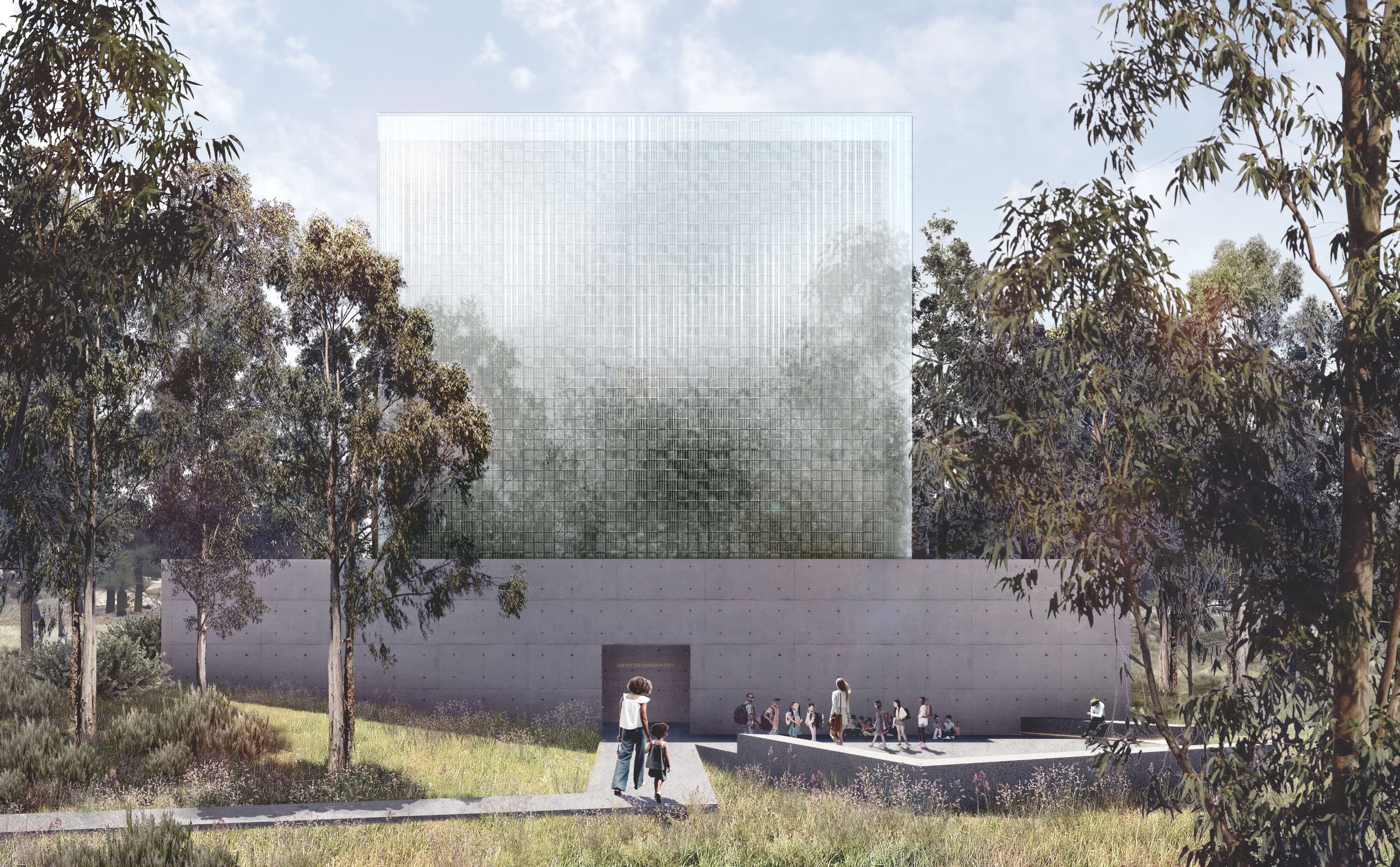
Looking at the trajectory of conservatories, observations emerge of visitor attractions that have become symbols of technological wonder relying on the shimmering transparency of an all glass shell to create a visual icon. Combined with this historical context are the sublime natural landscapes of the site, the Australian National Botanic Gardens.
 The Ian Potter Conservatory scale model.
Model by Make Models.
The Ian Potter Conservatory scale model.
Model by Make Models. Natural elements meet finely crafted concrete volumes.
Photography by Clinton Weaver.
Natural elements meet finely crafted concrete volumes.
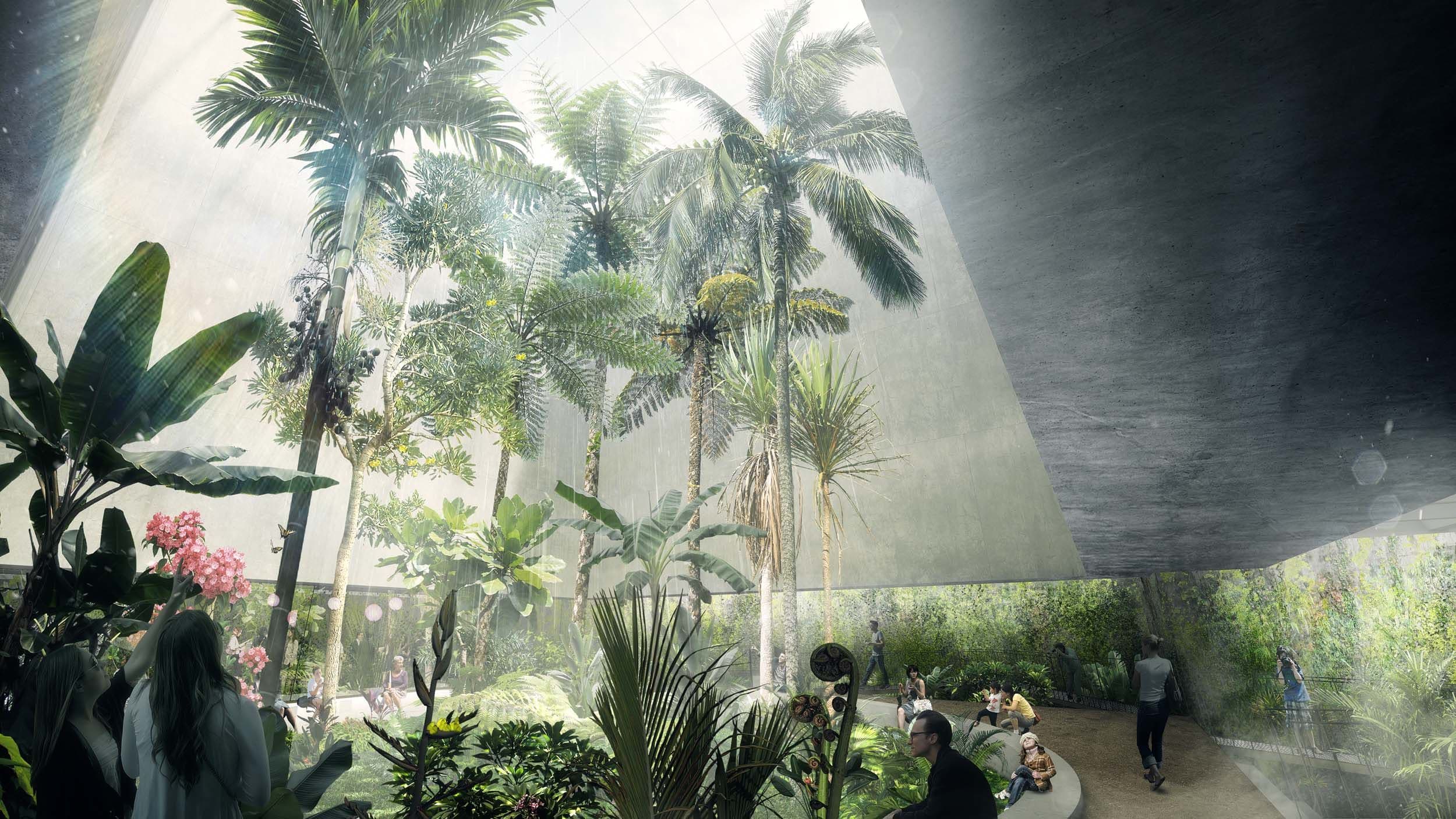
Photography by Clinton Weaver.As buildings dedicated to environmental conservation, there is a climatic challenge posed in the brief. Seemingly at odds to this is the proposition of growing tropical plants in Canberra, where temperatures frequently drop below freezing. In response, the Ian Potter National Conservatory’s sustainability approach is a meticulously constructed airtight envelope, thermal mass, and a mix of glazed and highly insulated opaque facades, that encloses the artificially controlled internal environment.
 An earlier construction shot shows the raw skeletal concrete forms in stark contrast to the botanic gardens.
Photography by Austin Miller.
An earlier construction shot shows the raw skeletal concrete forms in stark contrast to the botanic gardens.
Photography by Austin Miller. The steel skeleton floats over a solid base, ready for its skin of glass blocks.
Photography by Felix Rasch.
The steel skeleton floats over a solid base, ready for its skin of glass blocks.
Photography by Felix Rasch. The cross section reveals the diversity of spaces and the complex thermal skin that allows tropical plants to thrive in a frosty Canberra winter.
 Lushly planted 'chandeliers' will hang overhead.
 The structure turns the corner in an artful way.
Photography by Clinton Weaver.
The structure turns the corner in an artful way.
Photography by Clinton Weaver.The building appears as simple orthogonal forms, rich in materiality, that hide the layers of high-performing and thoughtfully considered junctions and interfaces. Rather than relying on the materiality of glass to create an experience through the enclosure, the building curates and amplifies contrasting experiences to create an unexpectedly complex and sublime procession through its relatively small footprint. This procession extends into the surrounding gardens and elevates the already rich visitor experience of the site.
 Work in progress reveals the entry sequence through a solid concrete mass grounded into the landscape.
Photography by Clinton Weaver.
Work in progress reveals the entry sequence through a solid concrete mass grounded into the landscape.
Photography by Clinton Weaver. The native forests around the centre will provide a strong contrast.
Photography by Clinton Weaver.
The native forests around the centre will provide a strong contrast.
Photography by Clinton Weaver. The lower galleries awaiting their plantings.
Photography by Clinton Weaver.
The lower galleries awaiting their plantings.
Photography by Clinton Weaver.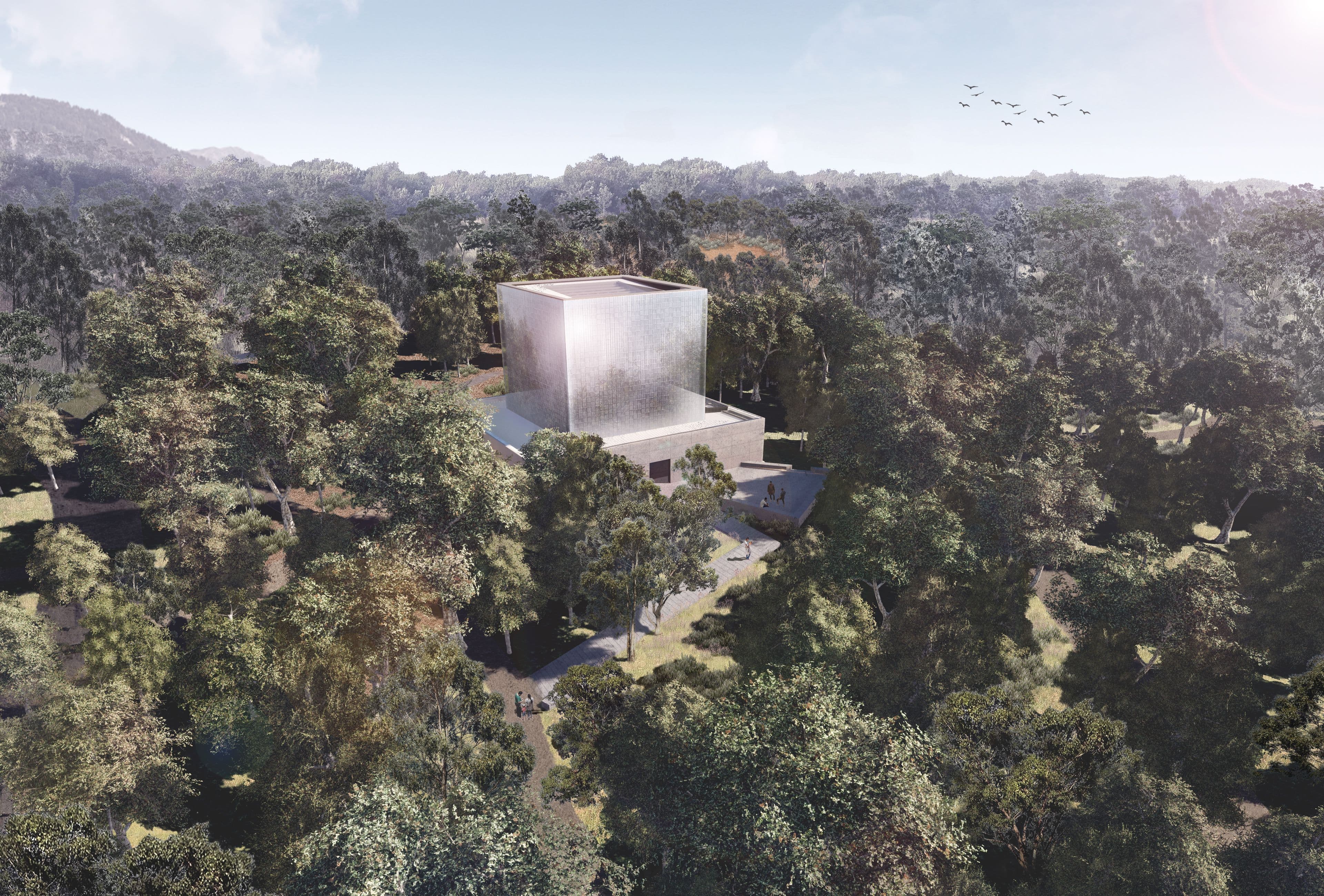
Credits
- Client
- Australian National Botanic Gardens
- Engineer
- SDA Structures (Structure), Steenson Varming (Services)
- Builder
- FDC
- Landscape
- McGregor Coxall
- Sustainability
- Atelier 10
- Photography
- Austin Miller, Clinton Weaver, Felix Rasch
Awards
- Shortlisted
- World Architecture Festival, Future Projects
- 2018
- Winner
- Architizer, A+ Awards - Unbuilt Institutional
- 2017
- Winner
- Design Competition
- 2016
Related Project