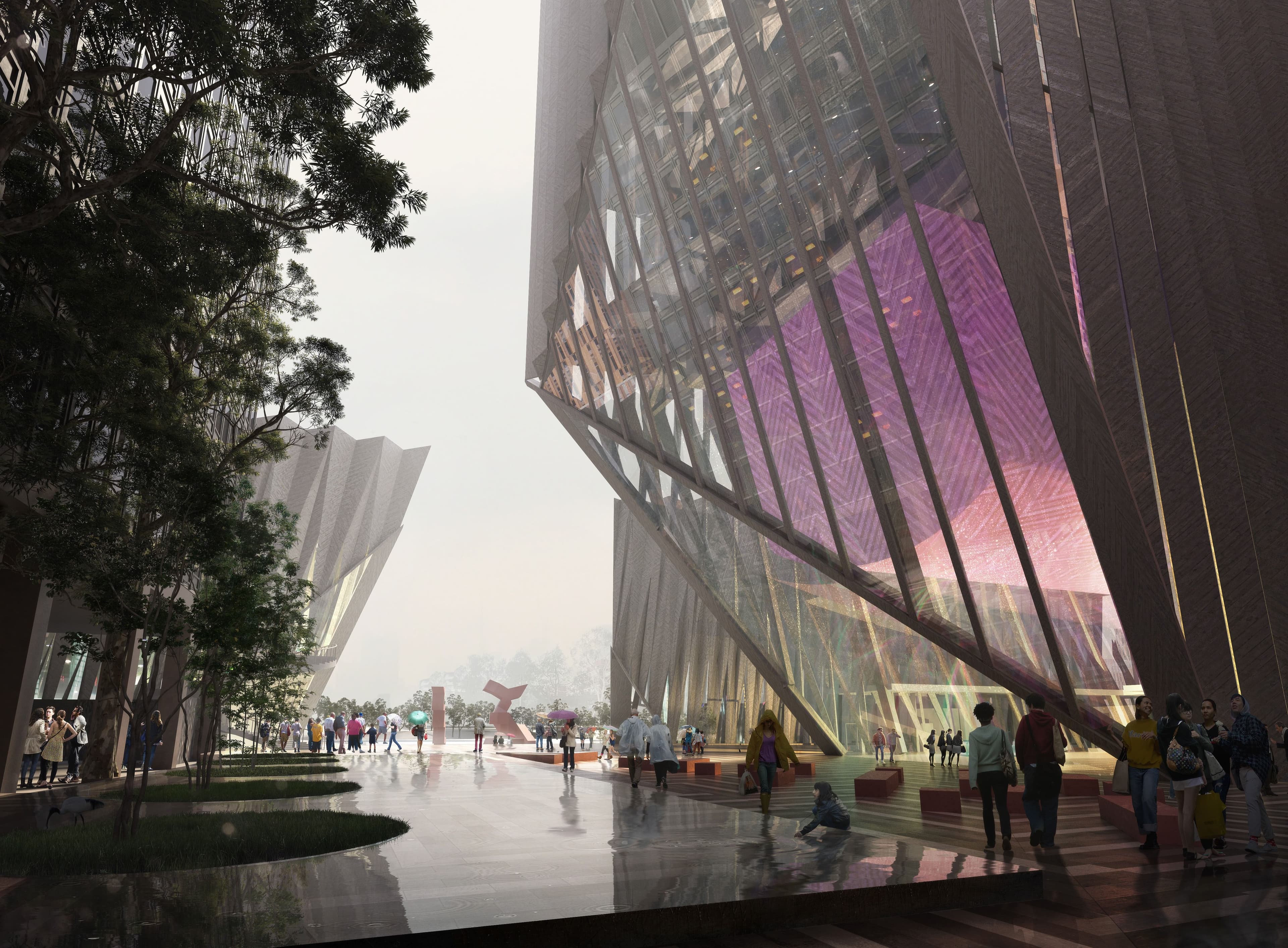
National Gallery of Australia Pavilion: A Room in the Garden
- Location
- Canberra, ACT, Australia
- Year
- 2024
- Status
- Completed (Competition)
- Filed under
- Public
The National Gallery of Australia (NGA) Sculpture Garden Pavilion is conceived as a quiet yet magnetic presence at the edge of the garden. Positioned on a former maintenance site, it opens a new gateway to the NGA from the lake and reconnects the campus to the surrounding parklands. Overlooking the expanded summer pond, the pavilion brings renewed life to the north-eastern corner of the grounds and offers a place to gather, rest and look out across the water.
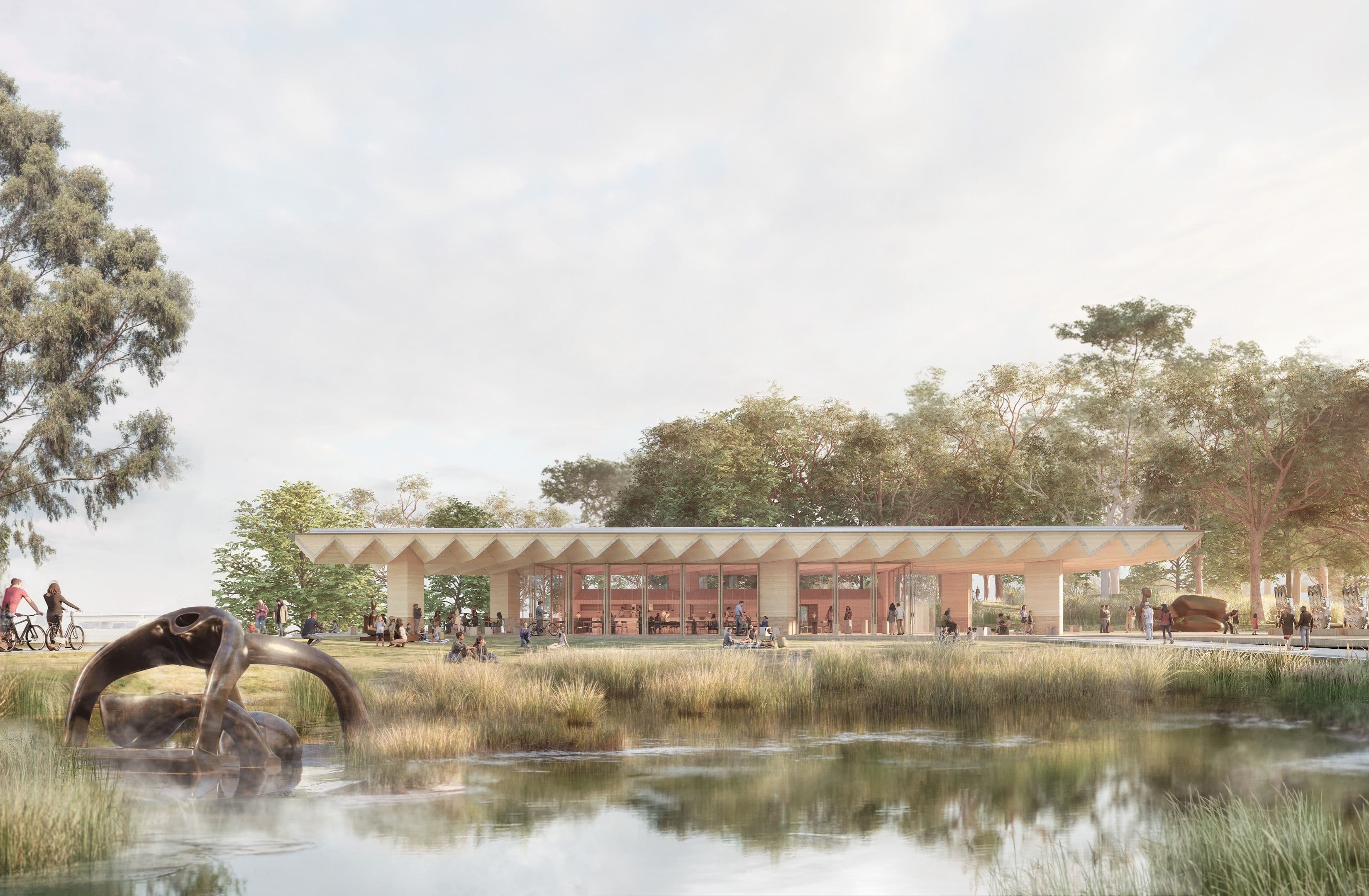
 National Gallery of Australia Pavilion Study Model.
Model by Make Models.
National Gallery of Australia Pavilion Study Model.
Model by Make Models.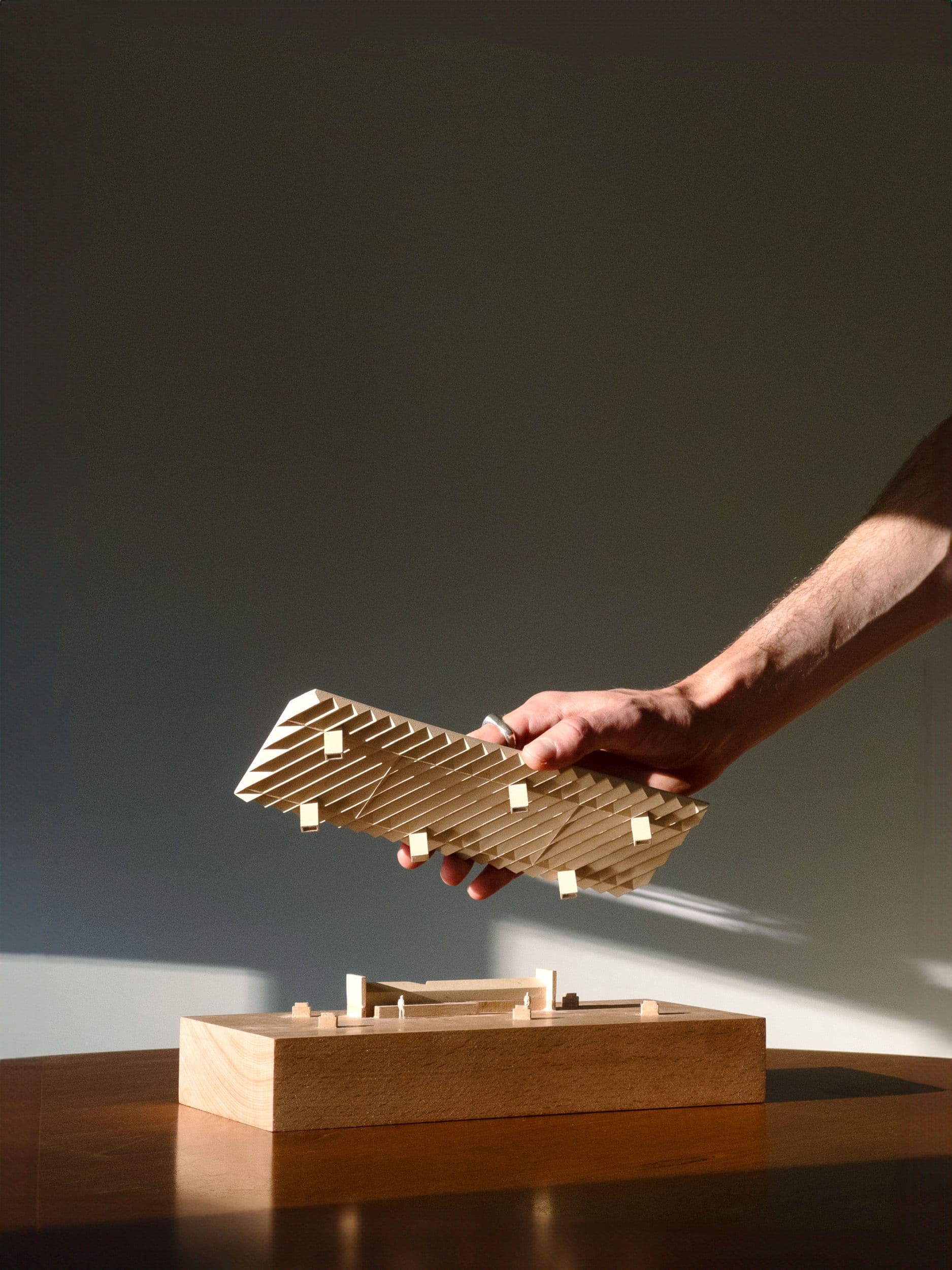
Designed as a warm timber structure, the building houses a café and restaurant with generous covered outdoor areas and strong visual links to the landscape. Large operable glazed doors open the interior to the garden while deep cantilevered roofs provide shade in summer and welcome lower winter sun. Beneath the main floor a basement contains back of house facilities, creating a clear and efficient plan that supports daily use and special events.
 The view out towards the lake and gardens is prioritised in the Pavilion design, large operable glazed doors allow interior spaces to completely open up, bringing the outside in.
Visualisation by Mogamma.
The view out towards the lake and gardens is prioritised in the Pavilion design, large operable glazed doors allow interior spaces to completely open up, bringing the outside in.
Visualisation by Mogamma. The Pavilion supports a unique roof structure, almost entirely timber.
Visualisation by Mogamma.
The Pavilion supports a unique roof structure, almost entirely timber.
Visualisation by Mogamma. Operable glazed doors and a flat threshold detail allows the internal spaces to bleed into garden.
Sustainability shapes every aspect of the design. Conceived to Passivhaus standards, the pavilion minimises energy demand through a well sealed envelope, solar hydronic heating and natural ventilation strategies. Rainwater is captured from the roof and reused on site, while low carbon Australian timbers reduce the building’s footprint. Together with the new Autumn Garden and expanded pond, the pavilion creates a flexible setting for exhibitions, learning and community life.
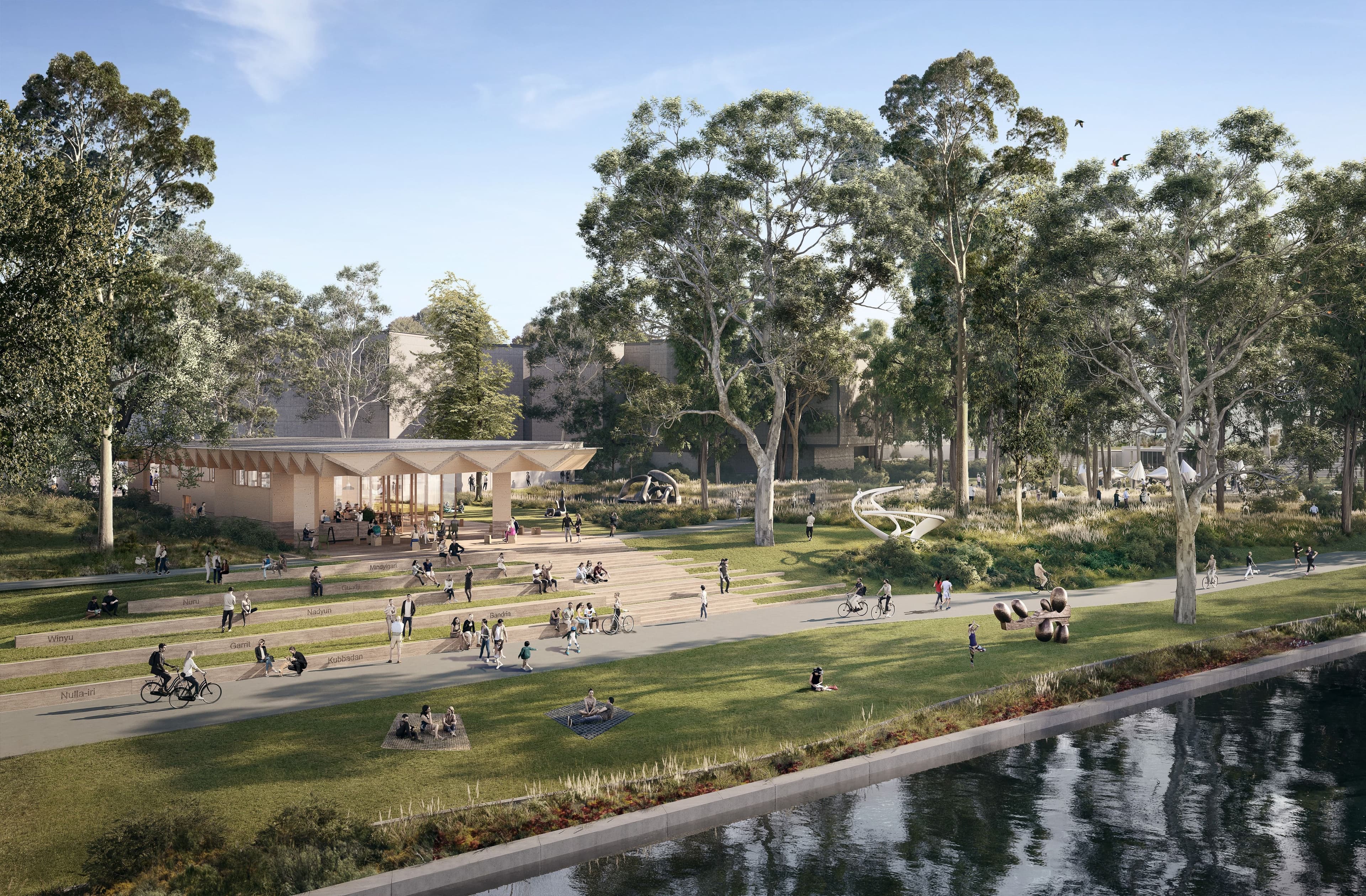
 The Pavilion's café.
Visualisation by Mogamma.
The Pavilion's café.
Visualisation by Mogamma.Credits
- Client
- National Gallery of Australia
- Engineer
- ARUP
- Masterplan & Landscape
- McGregor Coxall
- First Nations Consultant & Artist
- Judy Watson
- ESD
- Atelier Ten
- Heritage
- GML Heritage
Related Project